Evidence & Impact
What changed, and what we can verify.
Where CCAIE's programmes are making climate readiness visible, teachable and actionable — reported by programme, with figures kept honest and in context.
01 · Visible
Climate Action Index
Making readiness gaps measurable.
The Climate Action Index examines what the public record shows about subnational climate implementation. These figures describe how much of the system is now in view — a baseline institutions can work from.
37
Jurisdictions assessed
All 36 Nigerian states and the Federal Capital Territory examined against the same ten questions, answered only from public documents.
370
Public-record observations
Answers documented across those jurisdictions, giving institutions a traceable baseline to act on.
02 · Teachable
Rising Voices
Building capability young people can use.
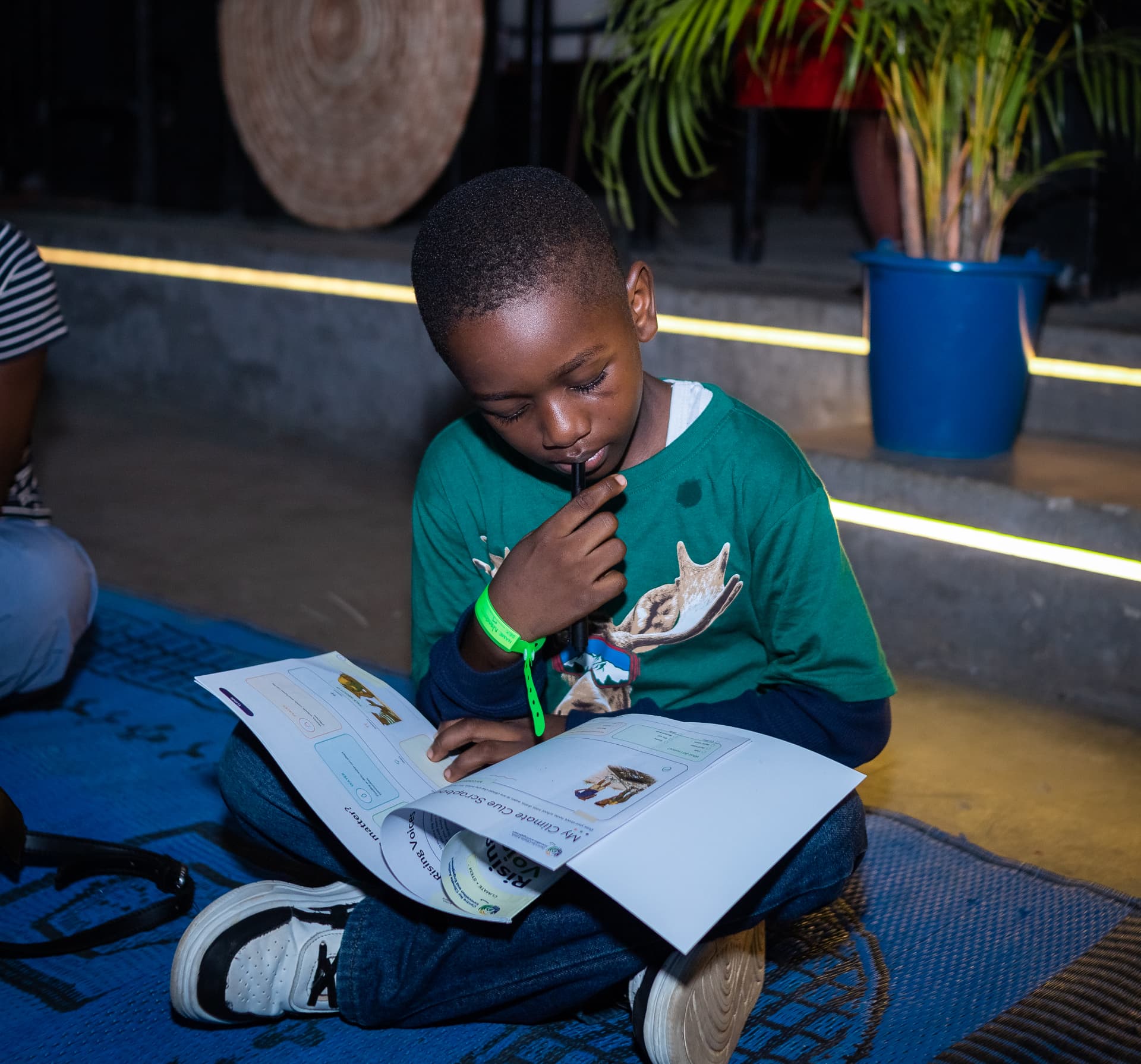
Rising Voices works with schools, teachers and young people to turn climate risk into practical learning and agency.
1,400+
Documented learning and participation reach
Total documented reach across Rising Voices editions from 2024 to 2026.
1,275
Student learning reach in H1 2025
Combines 750 students directly engaged through Rising Voices with 525 additional students reached through trained teachers.
750
Students directly engaged
Young people who took part directly in Rising Voices sessions in H1 2025.
40
Teachers trained
Trained to carry practical climate learning into their own classrooms.
3
Cities delivering Rising Voices 3.0
Abuja, Kaduna and Jos, 2026.
Rising Voices 3.0 · 2026 learning change
What changed through the 2026 learning experience
Rising Voices 3.0 assessed participants before and after the programme. The change below shows what moved.
Climate understanding
Point gain recorded across a Rising Voices session, on a 0–100 scale.
+77.8 pts
STEM and problem-solving confidence
Point gain recorded across a Rising Voices session, on a 0–100 scale.
+77.8 pts
Confidence identifying environmental problems
Point gain recorded across a Rising Voices session, on a 0–100 scale.
+33.4 pts
Readiness to take environmental action
Share of participants reporting they are ready to act.
100%
03 · Actionable
Rising Voices
Tracking use, not just exposure.
Follow-through matters more than attendance. These figures show what trained Rising Voices teachers carried into their own classrooms.
65%
Trained teachers integrated climate learning into classroom practice
Teachers reported using Rising Voices content and practical climate-learning approaches with their students.
525
Additional students reached by those teachers
An average of thirteen additional learners for every teacher trained, continuing after a session ends.