Climate readiness
What climate readiness means — and why it decides whether climate action happens.
Climate readiness is the capacity of institutions and people to translate climate risks and commitments into effective action. It is an enabling condition, not the destination.
Definition
An enabling condition, not a programme
Climate commitments are now widespread across Africa. Plans, pledges and strategies exist in almost every jurisdiction. What is far less certain is whether the systems, institutions and people needed to deliver them can actually do so.
That gap is what CCAIE calls readiness: the capacity of institutions and people to translate climate risks and commitments into effective action. Readiness is not a single project, a document or a training session. It is the underlying condition that determines whether any of those things produce protection, investment or results.
Because it is a capacity rather than an event, readiness has to be observed at more than one level.
Systemic
Whether laws, budgets, data and coordination across government allow climate risk to be acted on rather than only acknowledged.
Institutional
Whether a ministry, agency, state government or school has the mandate, staff, evidence and routines to plan and respond.
Individual
Whether the people inside and around those institutions — officials, teachers, learners, innovators — understand the risks and know what to do about them.
Measurement
How readiness is measured in Nigeria
Readiness only becomes useful when it is comparable. The Climate Action Index records what can be evidenced across every Nigerian jurisdiction, and publishes the gaps as clearly as the findings.
37
Jurisdictions examined
Nigeria's 36 states and the Federal Capital Territory
10
Questions asked of each
From responsibility and authority through to measured results
2,463
Fiscal records reviewed
Climate-relevant budget and expenditure line items
32 of 37
Name a responsible institution
Public documents identify an agency or office for climate work
Figures are from the Climate Action Index Nigeria application. Where a document could not be found, the Index records a gap in the public record rather than assuming that nothing is being done.
What strengthens it
Evidence, education and innovation
Readiness is built by working on the conditions that hold it back. CCAIE works across three connected capabilities.
Visible
Public evidence
Readiness cannot be improved while it is invisible. The Climate Action Index follows climate commitments through the public record of every Nigerian jurisdiction — who is responsible, how money moved and what was measured — using published documents rather than self-reporting.
Explore the Climate Action IndexTeachable
Climate education
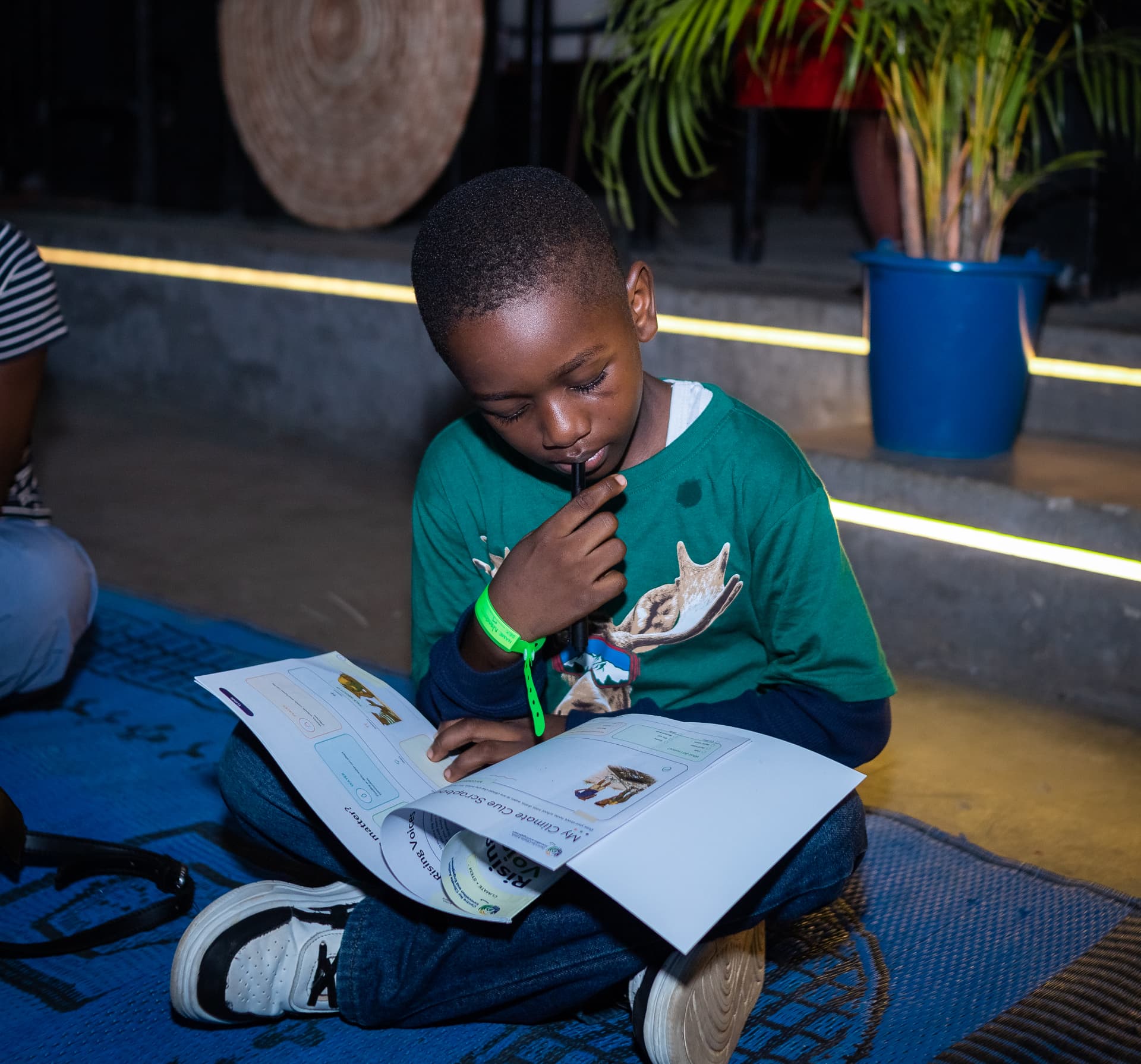
Readiness depends on people who understand the risks around them. Rising Voices puts climate learning and preparedness into the ordinary running of a school, so knowledge sits inside the institution rather than in a one-off event.
See Rising VoicesActionable
Youth-built solutions
Readiness is proved by what gets built and used. Crafting Tomorrow supports young innovators to develop and test practical responses to climate problems in their own communities.
See Crafting TomorrowWhy it matters
Readiness decides what a commitment is worth
A climate plan that no institution can implement does not reduce risk. Finance that reaches a government without the capacity to spend it well does not become adaptation. A curriculum that never reaches a classroom does not change what a generation knows.
This is why CCAIE treats readiness as the thing to measure and strengthen directly. Making it visible allows governments and funders to see where capacity is thin. Making it teachable puts understanding inside schools. Making it actionable turns that understanding into solutions people actually use.
Work with us
Work with CCAIE.
Climate readiness is the gap between ambition and implementation. Tell us the outcome you need and we will scope it with you.